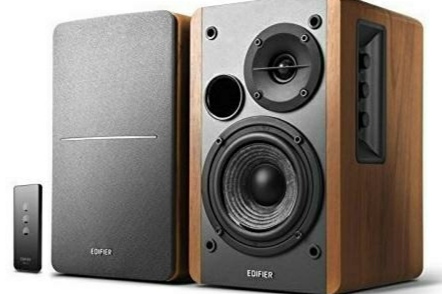
The first thing that you need to remember before choosing a speaker are the size of the venue and boundaries that your speaker will interact with such as walls, ceiling, and the floor.
You also need to account your budget and if you want to find best speakers within what you can afford, you should determine what sounds best according to that price tag. So what are the things you need to consider before buying speakers?
First things first, before buying a speaker you must ask for the specification sheet which readily available to most of the reputable manufacturer.
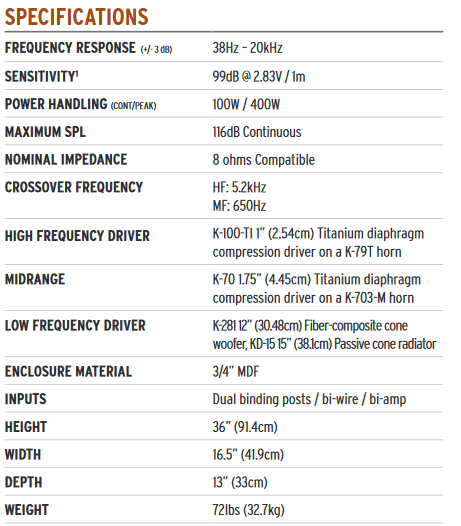
The most important thing to know about speaker specs are the frequency response, sensitivity or sound pressure level (SPL) output, and if you are planning to use passive speaker you should also account the wattage and impedance (ohm resistance).
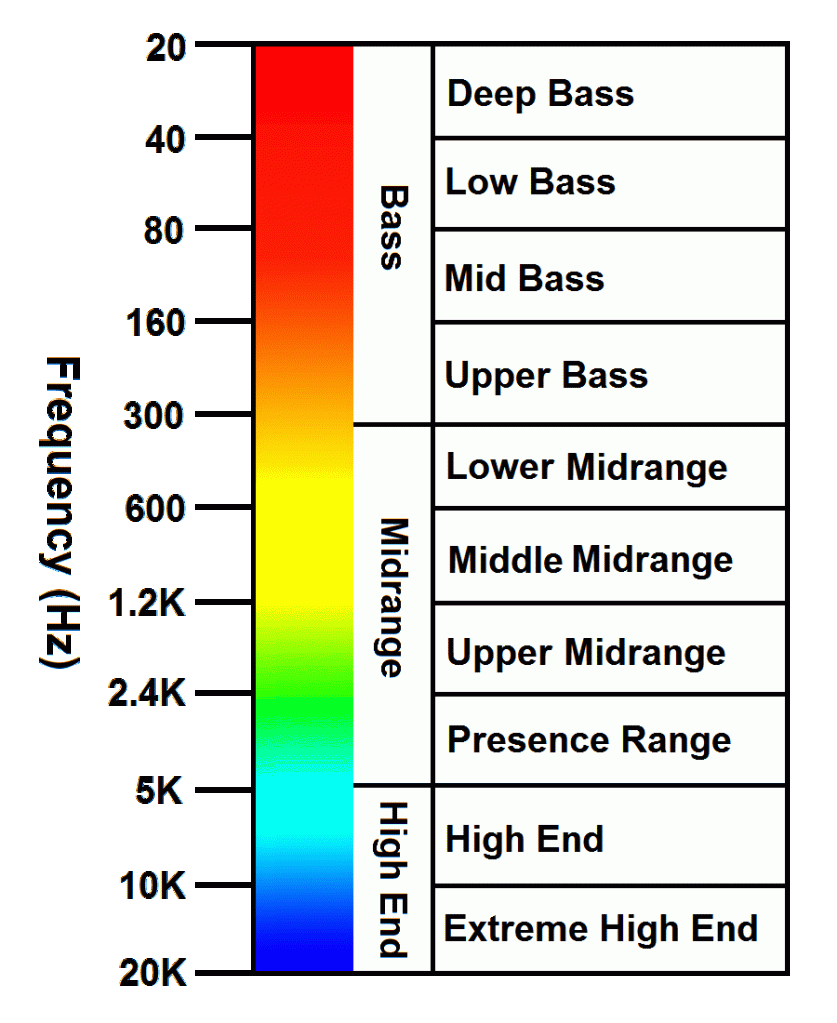
So what is frequency response? If we look at the sample picture above you would see a frequency response that ranges from 38Hz up to 20kHz, it does mean that the speaker is fine at wide range of musical genre such as country, folk, metal, rock, pop, hip-hop, and classical. To know what is the meaning of lower and higher frequency level (Hz) just look at the picture below.
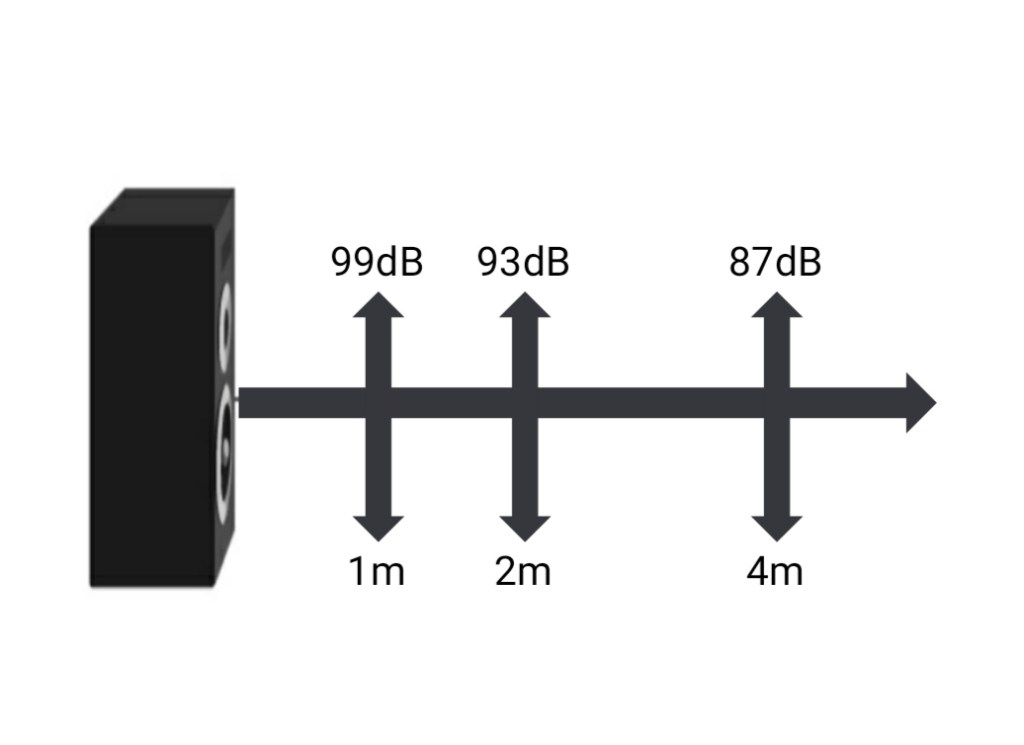
The sensitivity or the SPL on the other hand determines how loud the speaker at a given distance which typically starts at 1 meter and would decrease by 6dB after doubling the distance. Let’s take the sensitivity of the sample specs above which is 99dB/1m, this would mean that the loudness of the speaker at 1 meter is 99dB, doubling that distance (now 2 meters) the loudness will decrease at 93dB and doubling that distance again (now 4 meters) and the loudness will decrease to 87dB, so on and so forth.
Just a little bit of trivia, human ear can suffer irritation at above 90dB and would cause irreversible damage at around 120dB higher and in 150dB eardrums could burst. You should also account this whenever you are setting up your sound system as we would not like to damage any ears. You can also buy SPL meters to accurately check how loud your speaker output is.
Now if you are planning to use passive speaker over active speaker first you also need to know the wattage and impedance your passive speaker had. By the way, passive speakers are speakers that need an external amplifiers to operate, and active speakers are speakers that have built-in amplifiers.
Wattage is the power needed to operate your passive speaker, so taking the wattage of speaker from sample specs above, you would see the “100W(cont)/400W(peak)” this would mean that the continous wattage that the speaker need is 100W with the peak 400W, supply power above this and it could damage or blow up your speaker otherwise your speaker is design to absorb more power than it suggest it might survive and obviously we would want to avoid damaging our speaker as we don’t buy speaker just to blow them up so we need to add to our calculations the power that the speaker can handle to avoid mishaps.
Impedance is a resistance that your speaker offers to the current supplied from amplifier. It is quite tricky and complicated but this is the simple analogy on it, a speaker with lower impedance let’s say 4 ohms would produce louder sound than 8 ohms speaker at the same volume setting. But that doesn’t mean that it is best to buy 4 ohms than 8 ohms speaker because if your amplifier aren’t designed to supply power to 4 ohms speaker it could place a damage to your amplifier because it means that your amplifier needs to supply more power to 4 ohms speaker than 8 ohms which could mean placing a little burden to our friend. On the above spec sheet (again) we see the nominal impedance of “8 ohms Compatible” which means it has a resistance of 8 ohms so you need to raise your volume setting a little bit than normal to produce louder sound.
Another thing to remember in choosing your speaker is identifying the dispersion. Dispersion is the way how your speaker projected the sound vertically and horizontally so it is necessary to know especially in placing speakers to your venue. The specification sheet above doesn’t state any dispersion thing (sadly its quite useless now). So we are using different example, let’s say our speaker has 60° dispersion horizontally and 40° dispersion vertically.
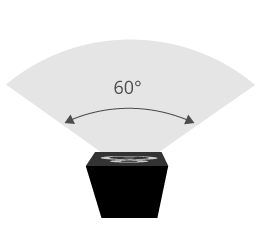
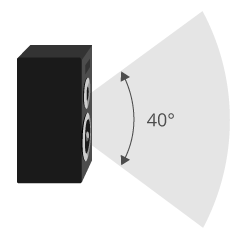
This data will help you to identify where to face your speaker and the proper height on placing them.
 WittyTech